Dutchie Partners with Roe to Scale a Best-in-Class Compliance Program
How Dutchie's compliance team automates the high-volume first pass and redirects experienced analysts to higher-value risk and enablement work.


Contents
The company
Founded in 2017, Dutchie has become the leading all-in-one technology platform for the cannabis industry. Its software spans point of sale, ecommerce and online ordering, payments, and loyalty and marketing, giving cannabis companies a single system to start, operate, and grow.
As the preferred platform across North America, Dutchie supports thousands of merchants and has facilitated over $100B in transactions, making it the most widely adopted retail technology platform in the industry.
That scale comes with a regulatory landscape unlike almost any other sector. Cannabis, which lacks a comprehensive federal framework, is considered a high-risk industry. Crucially, there is no single national rulebook: every state writes its own regulations and handles cannabis licenses differently, which adds complexity to compliance requirements. Ultimately, it leaves the team handling much trickier workflows under the highest scrutiny, all while ensuring that Dutchie maintains the highest compliance standards for its banking partners and customers.
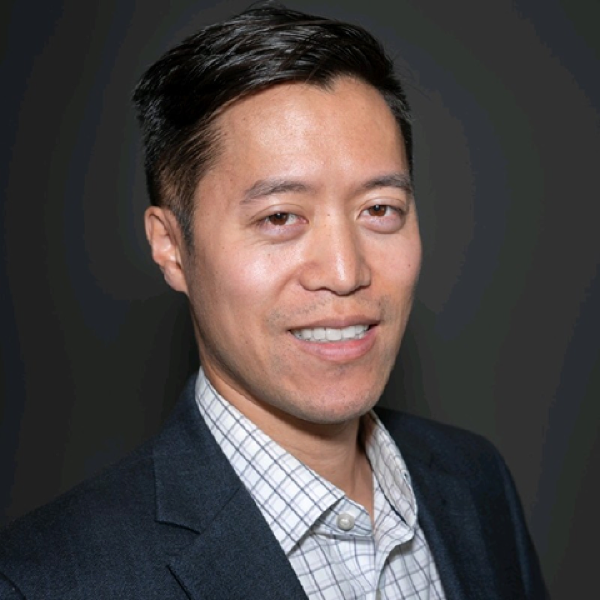
Francine Muhammad, Senior Director of Compliance and Enterprise Risk at Dutchie, leads teams that sit at the intersection of payments, compliance, and product. As Dutchie's volume scaled across all of those states, so did the operational load behind it.
The challenge: manual work that scaled with the business
The hardest part of the job wasn't the difficult cases. It was the sheer volume of routine ones. Reviewing alerts and compliance cases meant working through a queue where the vast majority of items turned out to be false positives: a name that superficially matched a watchlist, or a business flagged as inactive that was, in fact, perfectly active.
There was a lot of manual work that was just very time consuming, and as our volume increased, the load just kept growing.
By Francine's estimate, simply managing the caseload for a single workflow consumed a significant share of skilled analyst capacity, pulling the team away from higher-value problems. Across multiple workflows, that load compounded.
Why Roe
Francine evaluated a number of vendors. Several were genuinely impressive, but they shared two problems: they were expensive, and they expected Dutchie to adopt a whole new platform as its primary system of record.
Some of the other tools were impressive, but much more expensive, and the whole platform would change. Given the complexity of what we do, that was just too much.
Roe was different on three counts. First, it built to Dutchie's existing process rather than forcing a switch.
The biggest benefit is that Roe is able to build to our process. With the others, it was another environment we'd have to migrate to. Roe was a quick way to start tackling problems without changing too much of how we already work. It meets us where we are and it makes a material impact on resources.
Second, it could stand up a working solution fast, which, for a company scaling quickly, mattered more than chasing a perfect end state on day one.
If you can get a solution up quickly and reduce the load significantly, that makes a huge difference for a company like ours. And you can always make it better from there.
Third, and Francine names this directly, was how the Roe team worked.
I could tell there was a lot of motivation, and the team was delivering strong results from the start. You've done a lot of sophisticated work with other customers, too.
The regard runs both ways. For Roe, Dutchie stood out as a partner precisely because of the maturity of the program it was plugging into.
Dutchie runs one of the most sophisticated compliance and risk programs we have worked with. Their team's depth across payments compliance, state-by-state licensing, and merchant risk gave us a strong foundation to build on. Automation delivers the most value on top of a robust program, and that's exactly what Dutchie has built.
What Roe does for Dutchie
Roe handles the high-volume first pass across several of Dutchie's compliance and risk workflows, automating first-level fraud and compliance reviews, which lets analysts concentrate on the cases that warrant deeper analysis.
The impact
The clearest gains show up in speed, risk reduction, and accuracy, and they reinforce one another. By clearing the noise, Roe lets analysts stay present on the cases that actually matter.
It helps us fight fatigue. Roe helps us prioritize so we can spend our attention on areas that warrant more investigation. That's where the accuracy and the risk reduction come from.
On the resourcing side, the work Roe absorbs previously consumed thousands of hours of skilled analyst time each year, capacity Dutchie has redirected to higher-value risk and enablement work.
In her words
Asked what she'd tell a table of compliance and risk peers about Roe:
If you're working with them and you're aligned, and you put in the work to drive new process, you'll get results really fast. That's the most valuable piece. They're very accessible. We can bring them a use case and they iterate with us quickly to get it right. And it happens fast.
Interested in what Roe could automate for your compliance and risk teams?
Get in touch